A compact park with groundwater forest, lake-edge habitats and Rift Valley views.
Why travel here
Understanding Lake Manyara National Park
A compact park with groundwater forest, lake-edge habitats and Rift Valley views.
We recommend enough time to understand the habitat rather than treating the park as a quick stop. Private guiding keeps each day responsive to wildlife conditions.
Essential information
Access, fees, wildlife and timing in one place.
Getting there
Access depends on the wider route. Private road transfers suit nearby circuits, while scheduled or charter flights reduce long travel days.
Park fees
Entry and conservation fees depend on nationality, age, season and activity. Limitless Adventures includes confirmed fees in the final safari price.
Activities
Game drives · Birding · Canopy walk · Community cycling
Wildlife
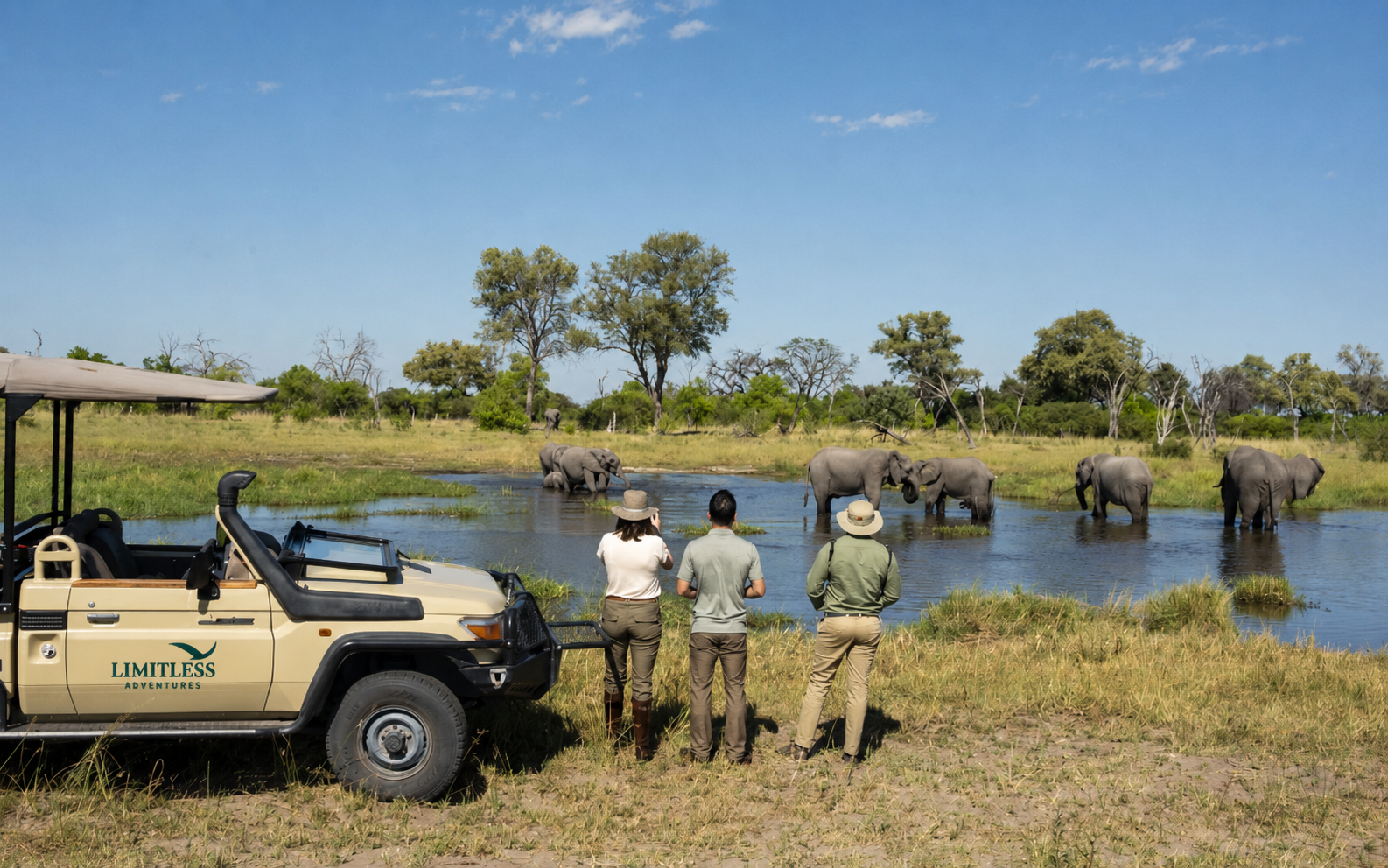
Elephants, lions, buffalo, giraffes, hippos, monkeys and waterbirds.
Recommended for
Private wildlife safaris · Photographers · Couples and families
Best time
June to October and December to February
Best time to visit
Lake Manyara National Park through the year.
June to October and December to February
January to March
Seasonal character
Warm conditions and strong wildlife opportunities, with regional green-season character.
April to May
Seasonal character
Lush scenery and fewer visitors, with heavier rain and some access changes.
June to October
Seasonal character
Dry-season travel, dependable access and concentrated wildlife in many habitats.
November to December
Seasonal character
Short rains refresh the ecosystem and support birding and photographic colour.
Top accommodations
Stays chosen for access, privacy and setting.
We recommend camps and lodges for their setting, guiding, privacy and access. Limitless Adventures arranges these stays as part of your private journey.
“Every transfer worked, our guide read our pace perfectly, and the gorilla day exceeded everything we had hoped for.”
“The camps felt intimate, the wildlife time never felt rushed, and every detail protected our time together.”
“Our guide kept three generations engaged. The private conservancy stay gave us space and flexibility.”
Park FAQs
Nine detailed questions about Lake Manyara National Park.
Most travellers should allow three or four nights, giving private guides enough time to work with weather, wildlife movement and different activity periods. A shorter stay covers the main highlights, while a longer stay supports slower mornings, photography and a wider choice of experiences.
The best months depend on rainfall, wildlife movement, visitor numbers and the activities you value most. Limitless Adventures compares these factors against your dates, then recommends the strongest season and explains the practical trade-offs before confirming the route.
Access normally combines an international gateway with a private road transfer, scheduled flight or charter flight. We compare total travel time, baggage limits, road conditions and cost, then arrange the option that protects your safari time without adding unnecessary connections.
Private guiding forms the standard approach for Limitless Adventures journeys wherever local operating rules allow it. Your guide adjusts departure times, wildlife focus, rest stops and the pace of each day around your interests rather than following a shared group schedule.
The right stay depends on access, guiding quality, privacy, room configuration and budget rather than the highest category alone. We present suitable lodge, camp and private-house choices, explain their differences and confirm the option that fits your preferred comfort level.
Park, conservation, concession and activity fees vary by location, season, nationality and age. Your confirmed journey states each included fee and permit clearly, including any limited permits that require early payment or remain subject to availability.
Wildlife remains free-ranging, so no ethical operator guarantees a specific sighting. Strong timing, patient private guiding and several nights in one area improve the quality of the experience, while your guide adjusts each day around current conditions and recent wildlife movement.
Pack breathable neutral clothing, a warm layer for early mornings, sun protection, comfortable closed shoes, binoculars and a light rain layer. We send a route-specific list covering luggage limits, trekking equipment, camera needs and seasonal clothing before departure.
Reserve six to twelve months ahead for peak seasons, small camps, migration areas and limited primate permits. Shorter lead times still work outside peak periods, although early planning gives you a stronger choice of rooms, guides and internal flight times.